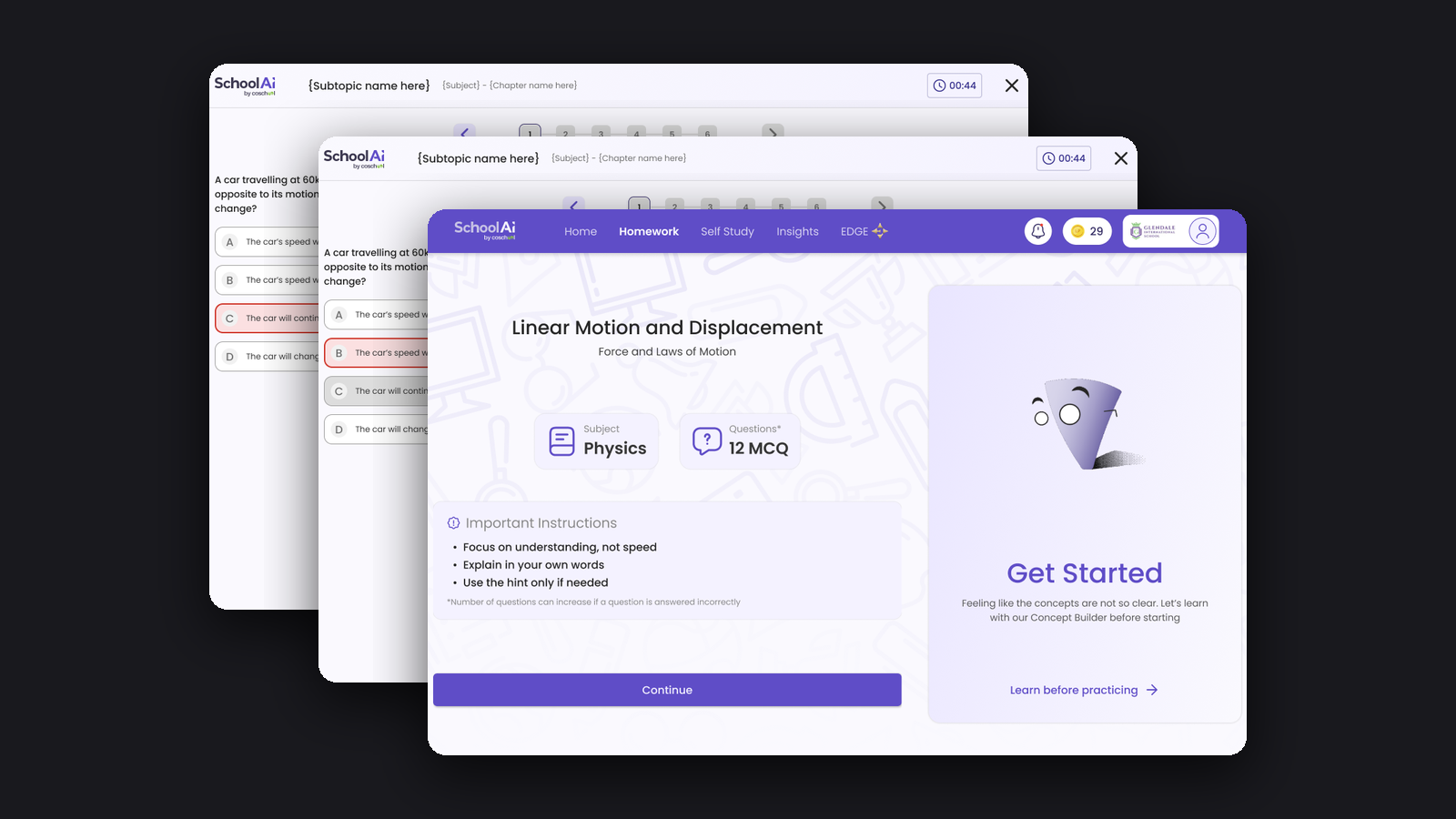
Guided Practice Revamp
Giving students control over how they learn with AI
My responsibilities: UX Strategy · Product Direction · Information Architecture · Interaction Design · Gamification · Design System · Team Delegation
Research & validation: Student behaviour data · Heatmaps · Oakridge student workshop · ~12,000 Guided Practice interactions
The Old Experience
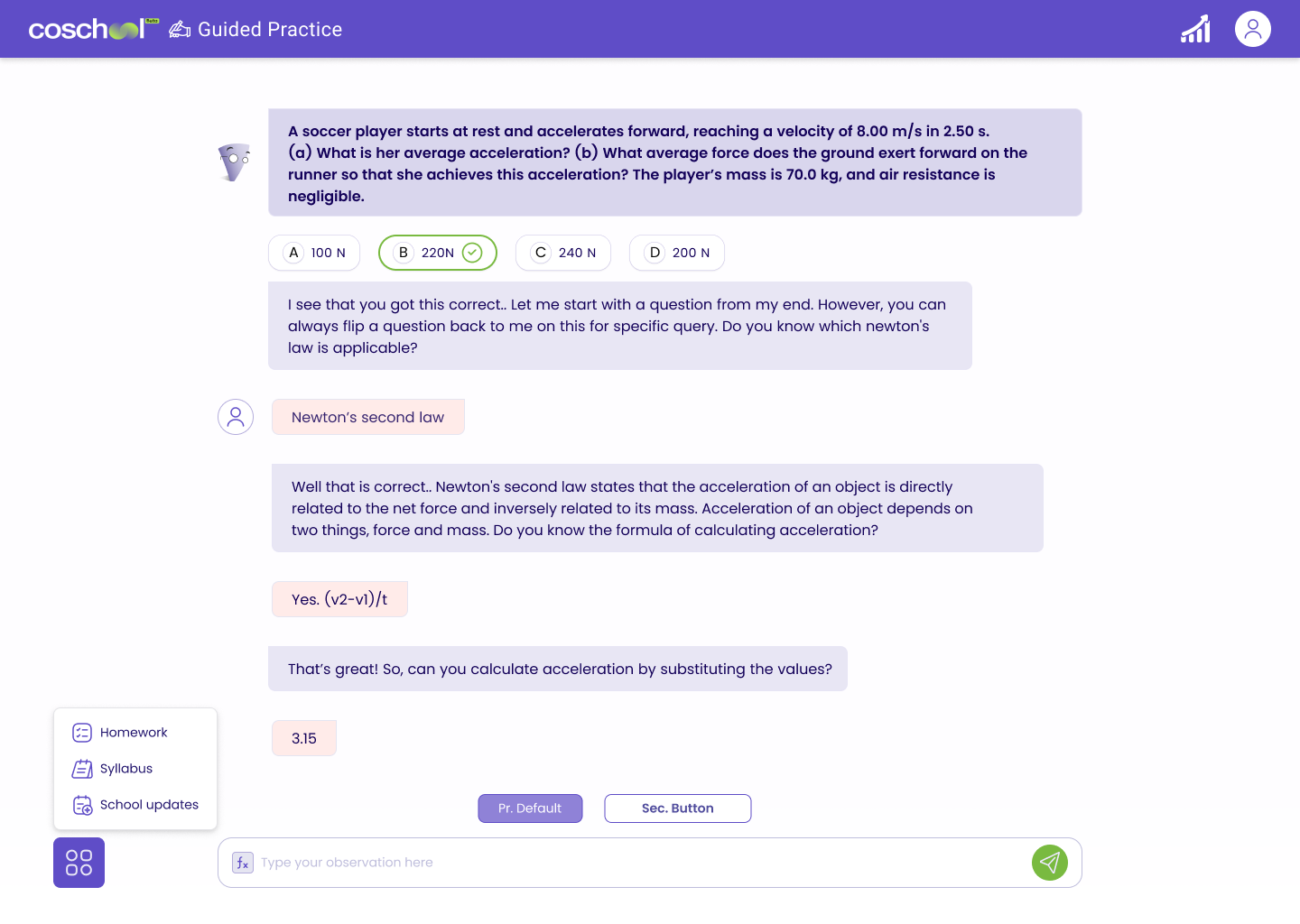
Guided Practice was designed to help students learn through practice with Vin, Coschool's AI Tutor. The original idea was well-intentioned: don't just tell students whether an answer is right or wrong, help them understand the concept.
But the way this was implemented created an unexpected conflict. Vin controlled almost every part of the experience. The student answered a question. Vin responded. The student had to continue the conversation. Vin decided when enough learning had happened. And Vin controlled when the student could move to the next question.
The Original Flow
Teacher assigns GP → Student starts homework → Vin presents a question → Student answers → Vin explains / asks follow-up questions → Student responds again → Vin decides whether the student can move forward.
The Unexpected Behaviour
The problem wasn't that students didn't understand. A teacher might assign a 10-question Guided Practice expected to take 15–20 minutes. But if a student got several questions wrong, Vin could introduce two or three additional similar questions for each mistake. What looked like a 10-question assignment could feel like a 30-question assignment.
7,000 Gibberish Messages
We analysed ~12,000 Guided Practice interactions and found around 7,000 gibberish messages. Even focused students sometimes typed random text.
A Signal of Lost Agency
Students were trying to regain agency. They had discovered Vin was an obstacle. Typing gibberish became a way of trying to escape the interaction.
The Core Insight
To understand whether this was a genuine experience problem, we conducted a workshop with students from Oakridge School. The workshop reinforced what we were seeing: Students didn't necessarily dislike getting help. They disliked being forced into help when they didn't want it.
The Design Principle
The student leads. The system supports. Vin helps when needed.
The New Experience
Attempt
Ask Vin
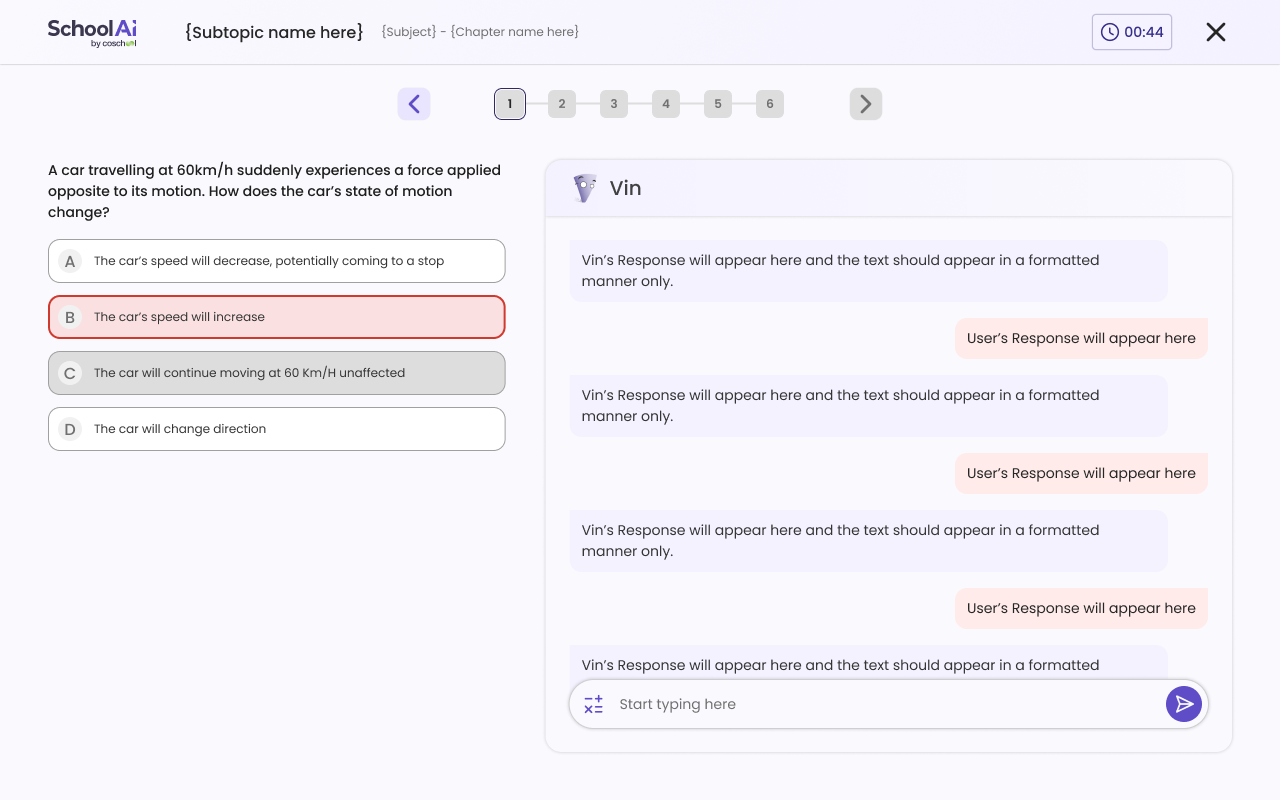
Understand
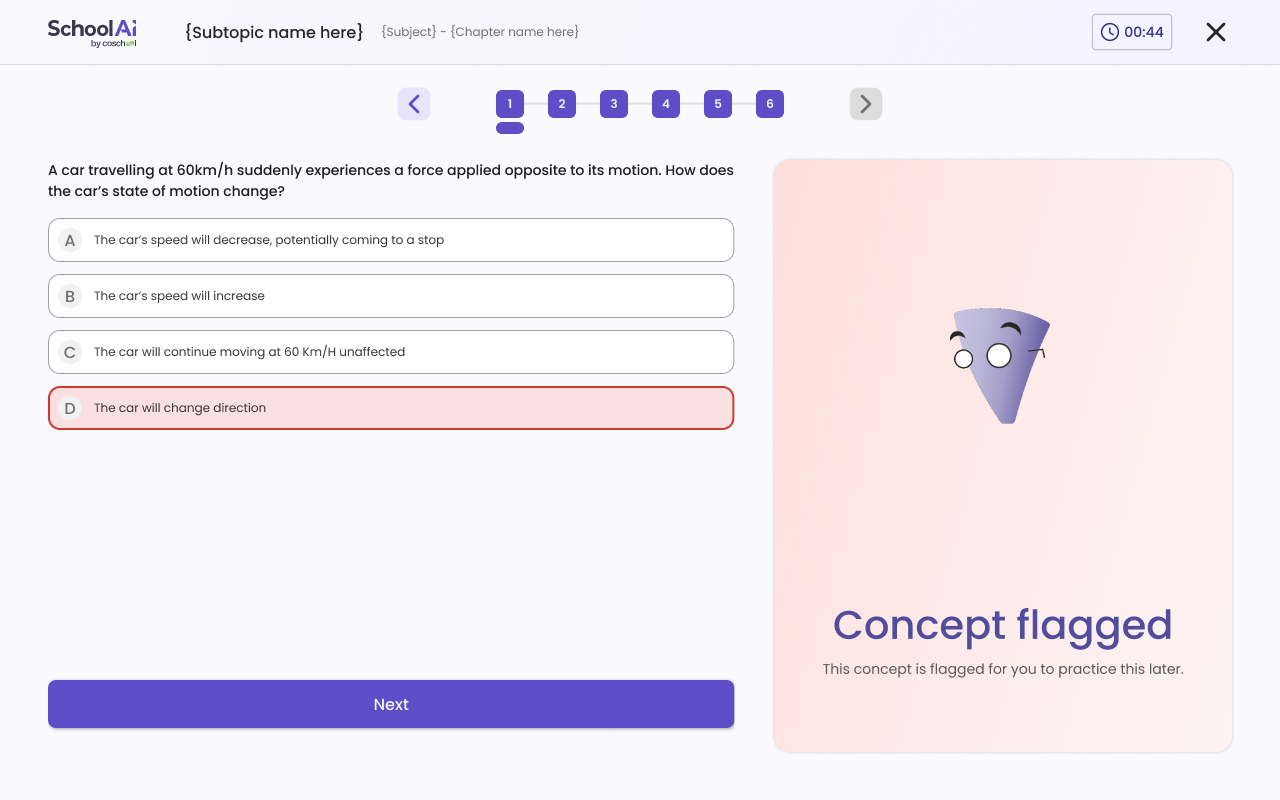
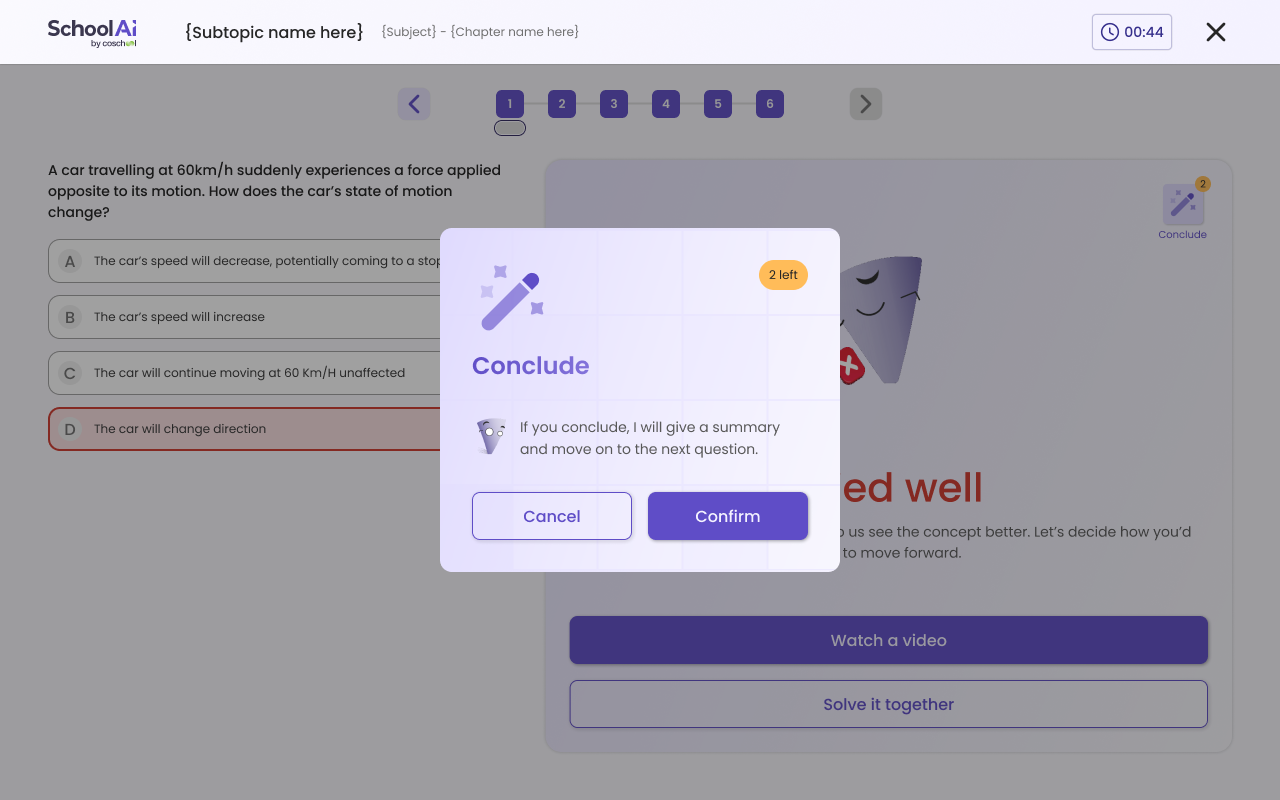
Similar question
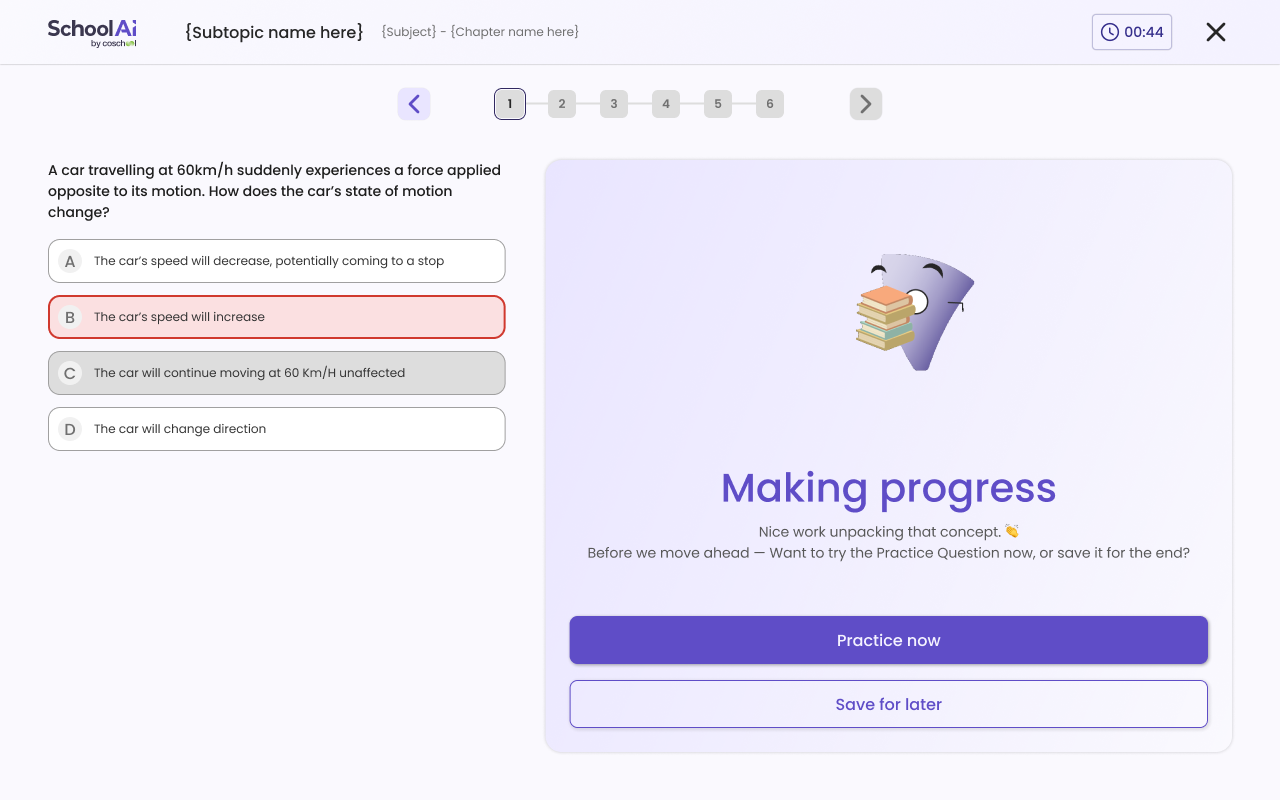
Continue Flow
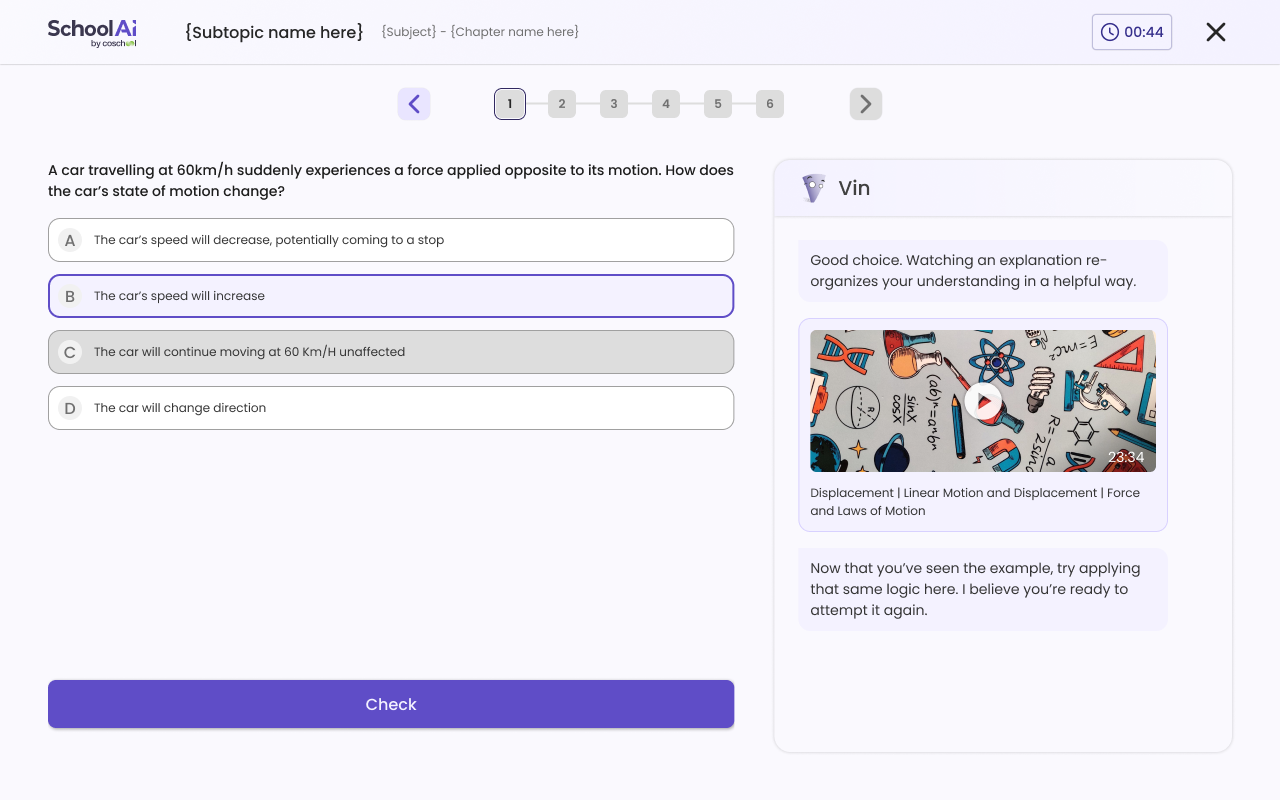
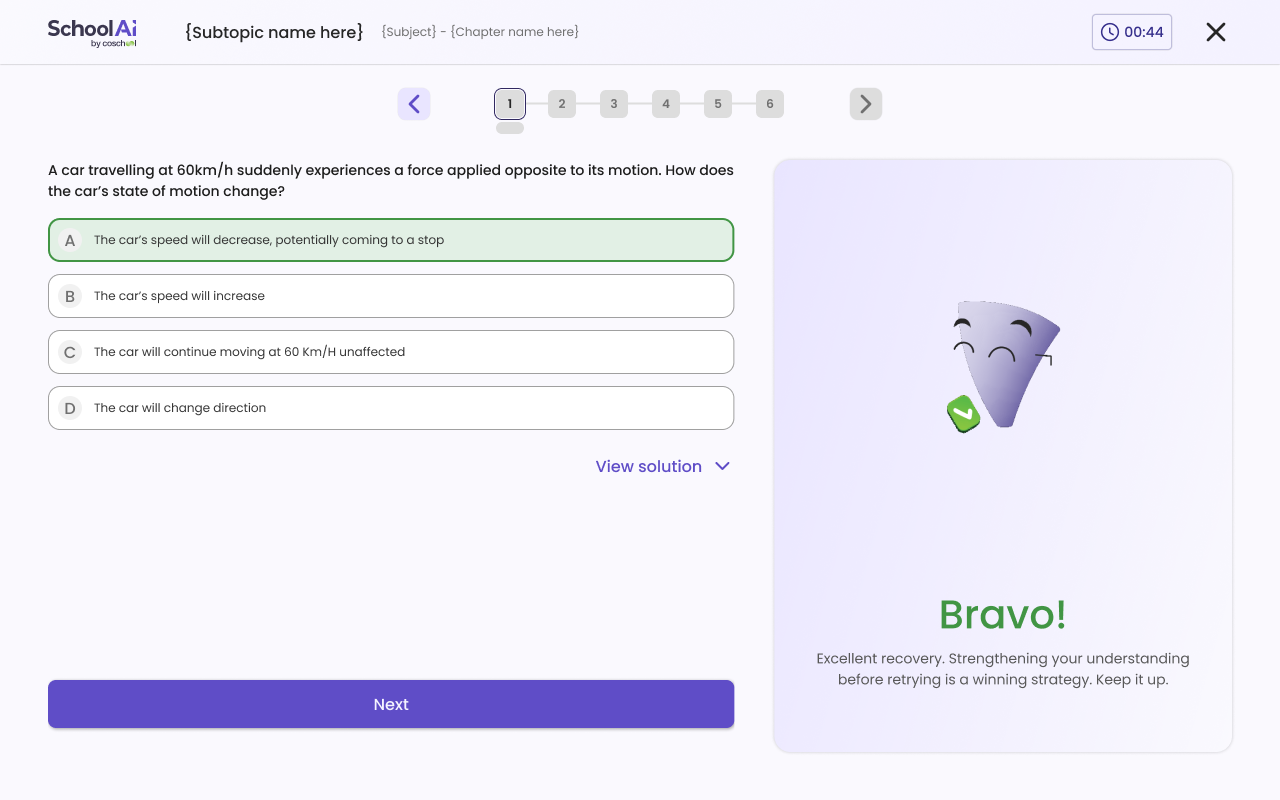
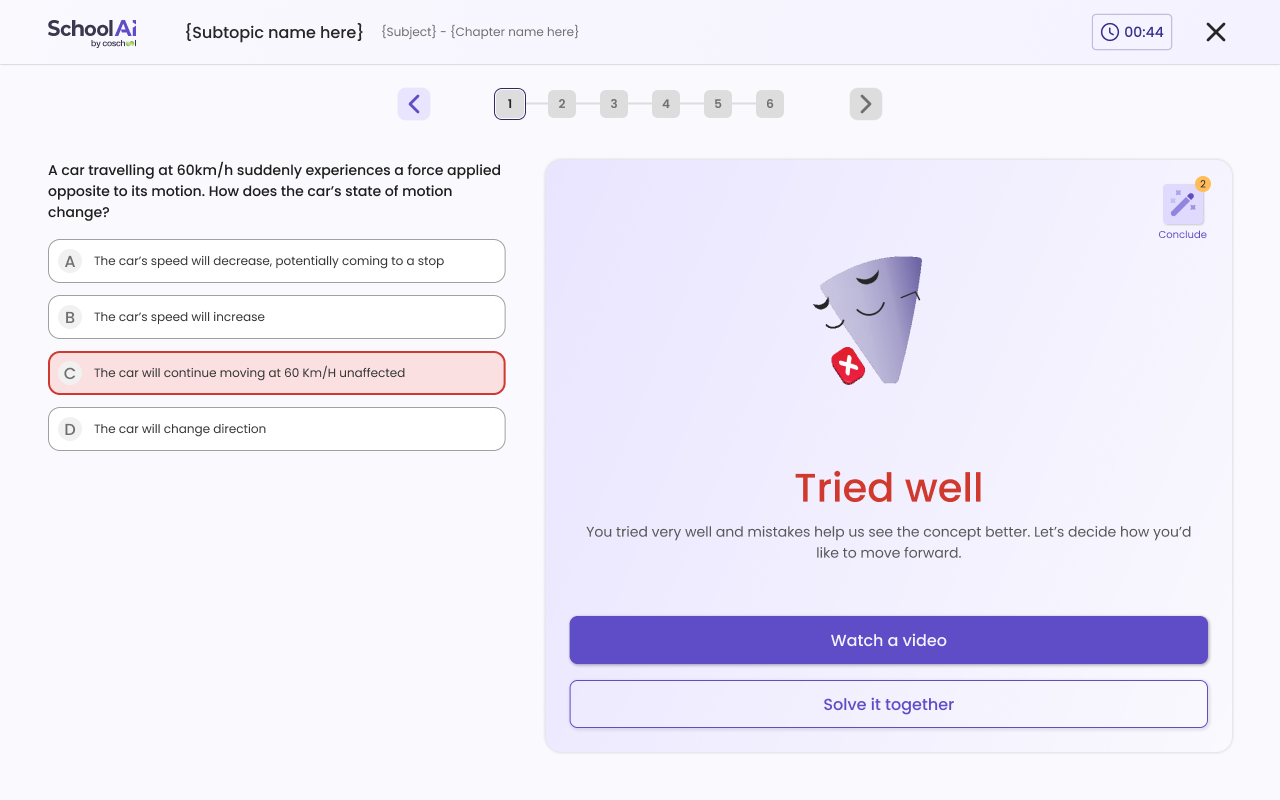
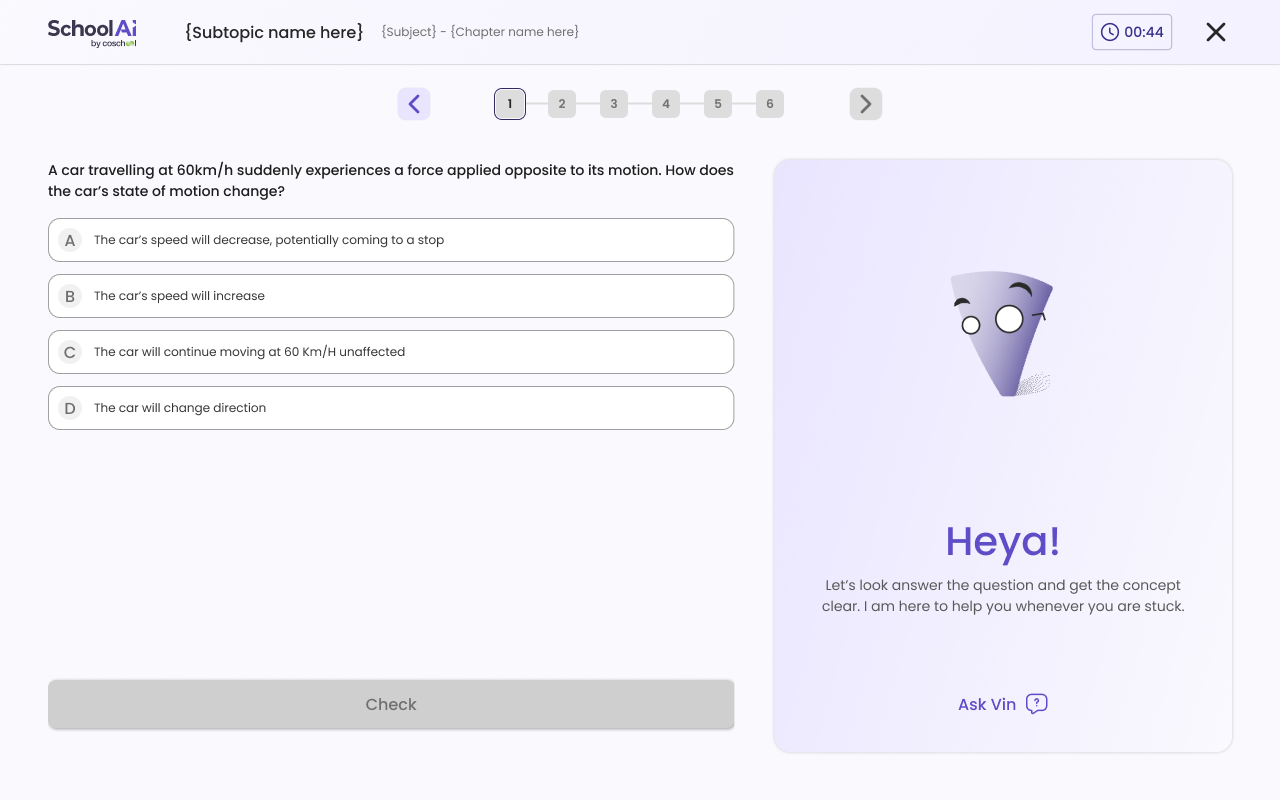
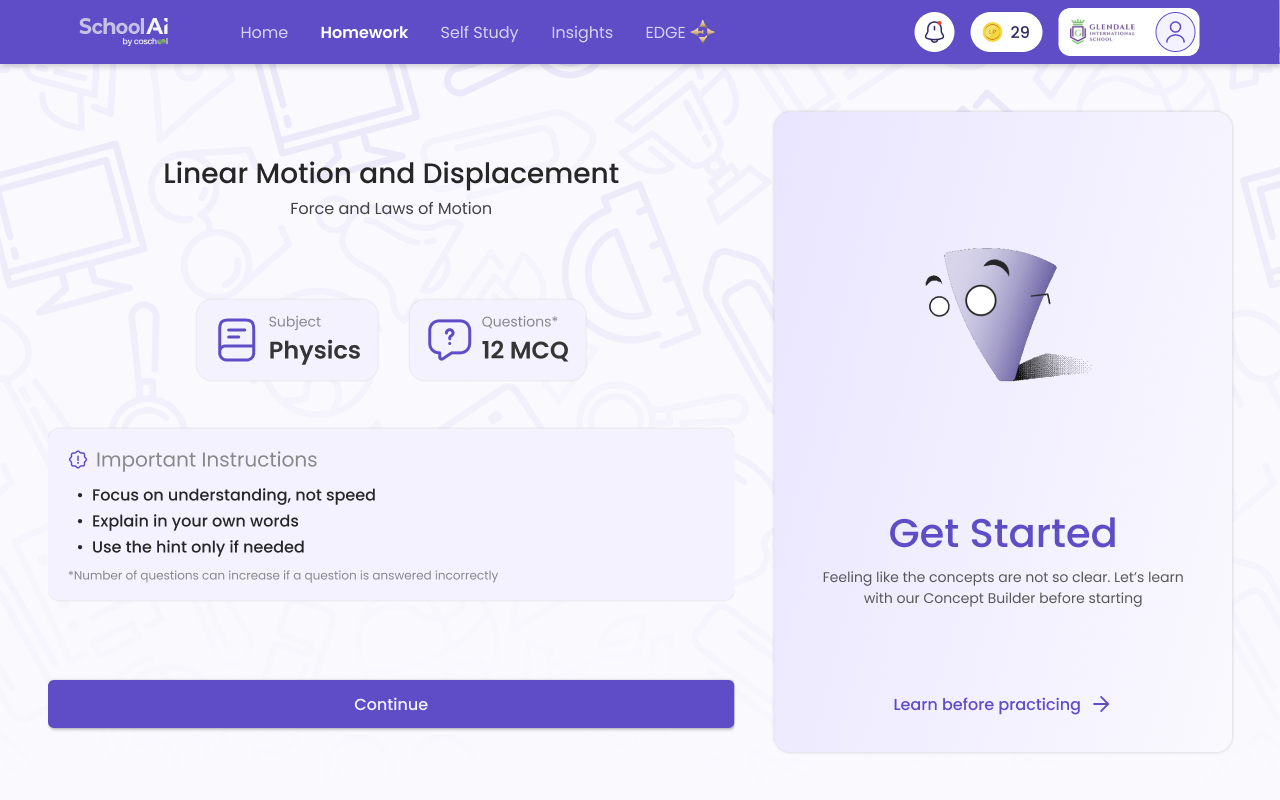
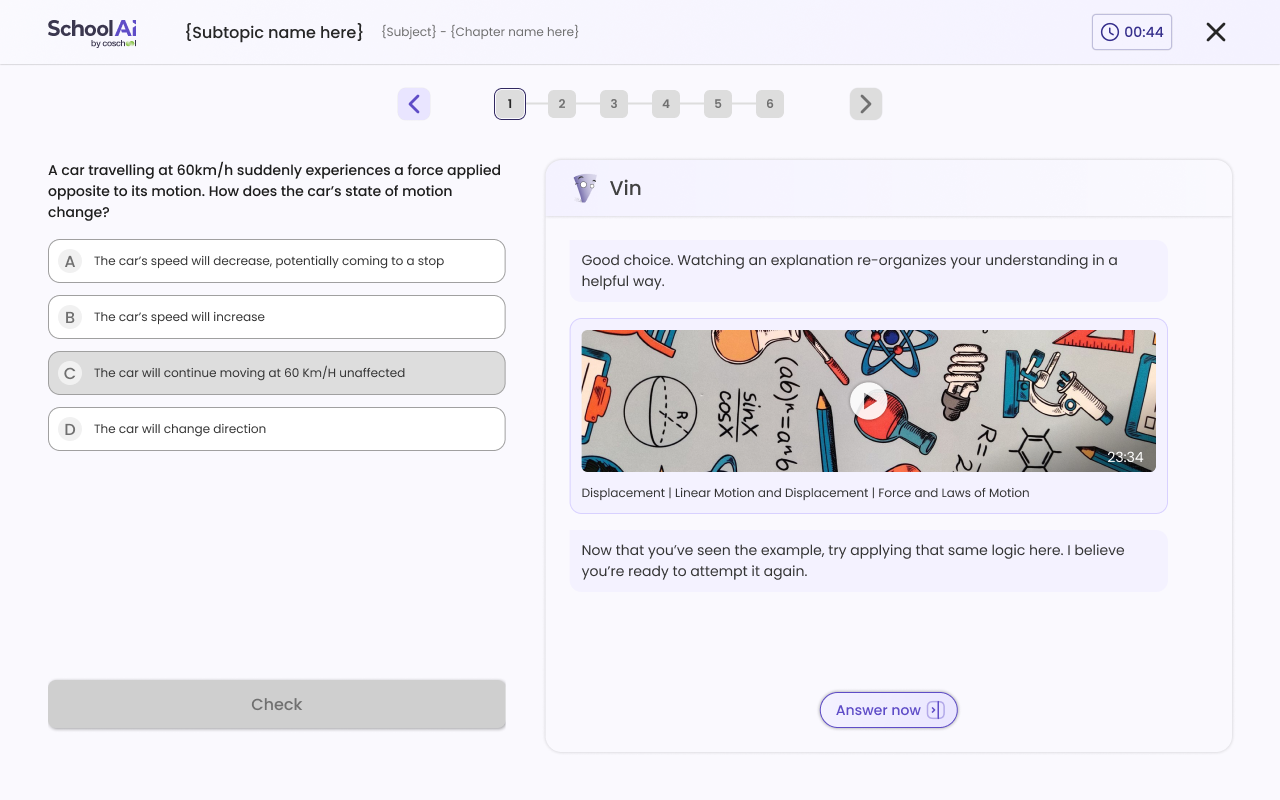
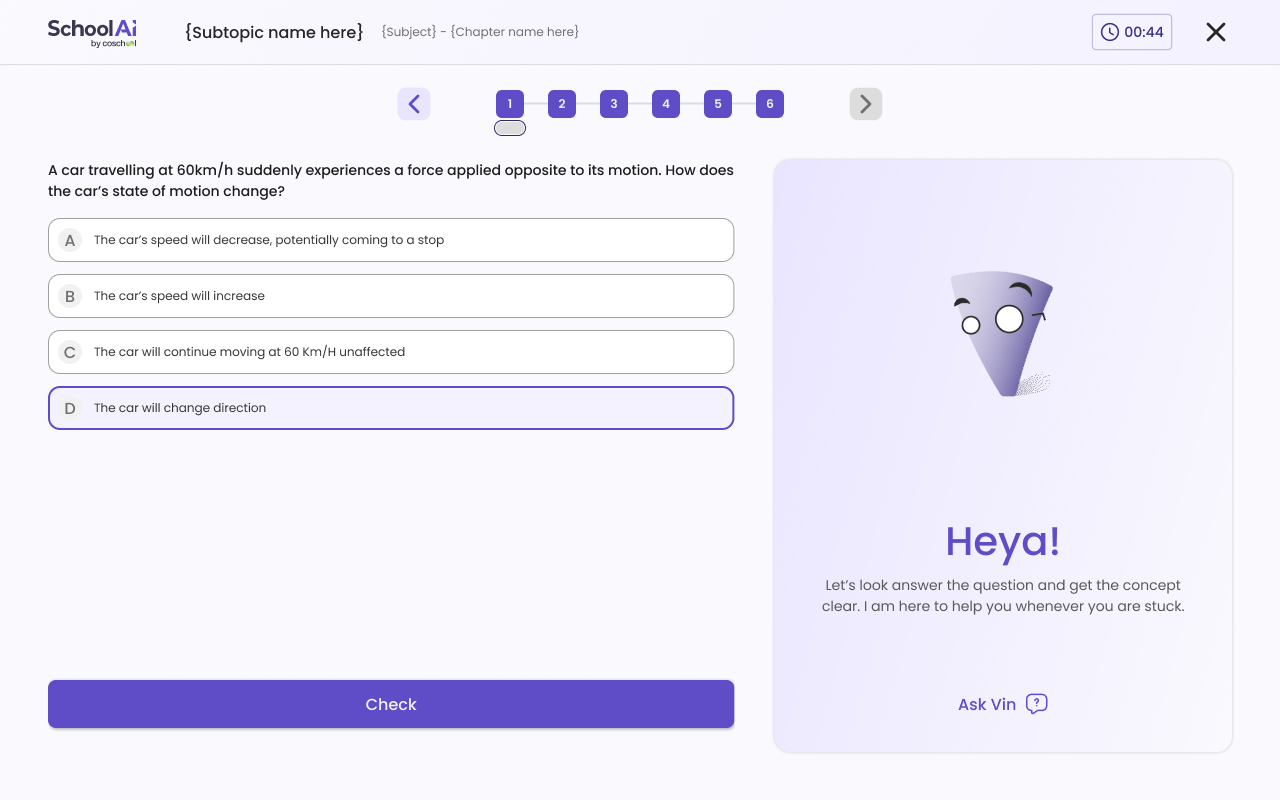
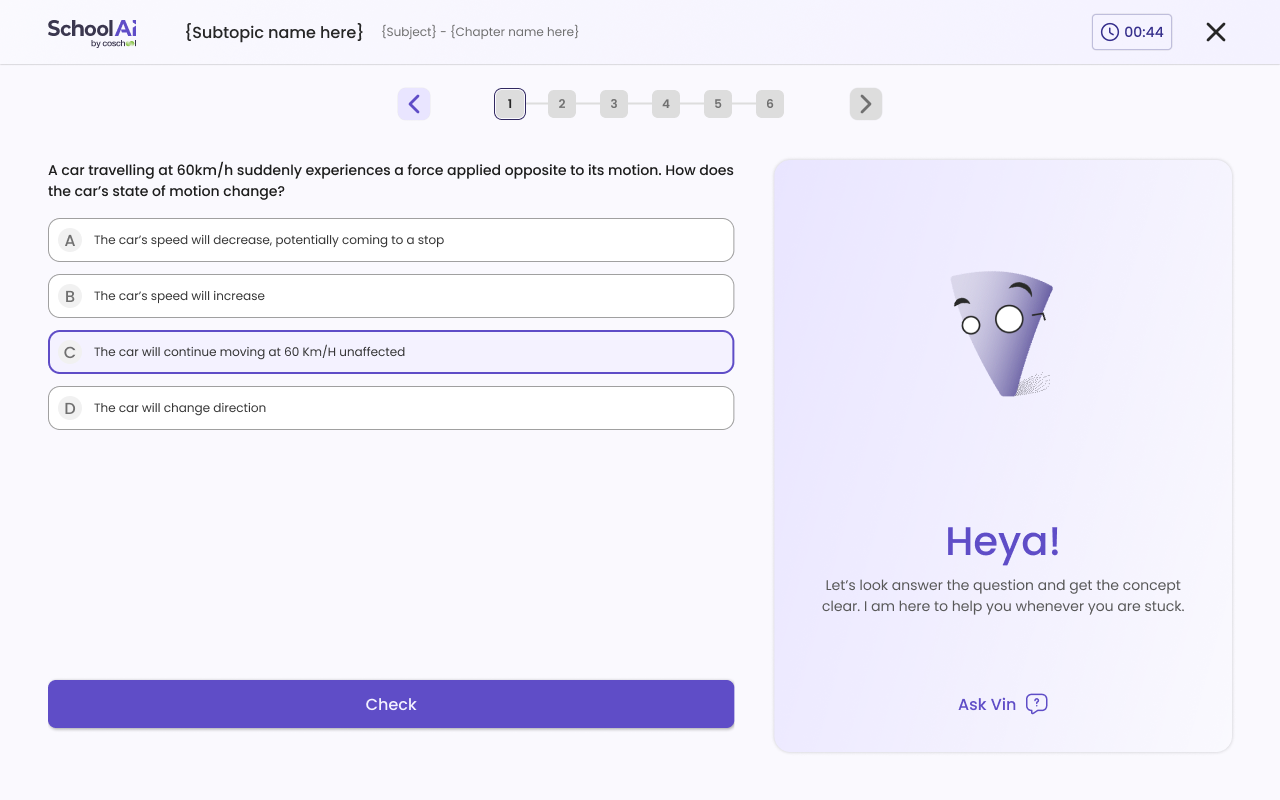
We moved away from an AI-led conversation and introduced a more structured model. Instead of entering a conversation with Vin, the student sees a focused question and answer options. The primary task is clear: attempt the question. Vin is available, but no longer dominates the screen or controls progression.
System Controls Structure
Questions, attempts, progression, concept tracking, and learning recommendations.
Student Controls Agency
Attempt independently, ask Vin before answering, ask for clarification, discuss mistakes, and choose how to use support.
The Learning Loop & Gamification
We introduced a new path for students who want to learn first. Instead of "Don't know → Attempt → Get stuck → Forced learning", students could choose "Don't know → Learn first → Attempt with more confidence". If they answer incorrectly, they can discuss the mistake with Vin and reinforce it with exactly one similar question.
We also introduced an economy around student choices using coins earned through performance. Coins introduced an economy around student choices. Performance created rewards. Rewards created options. And options created more control.
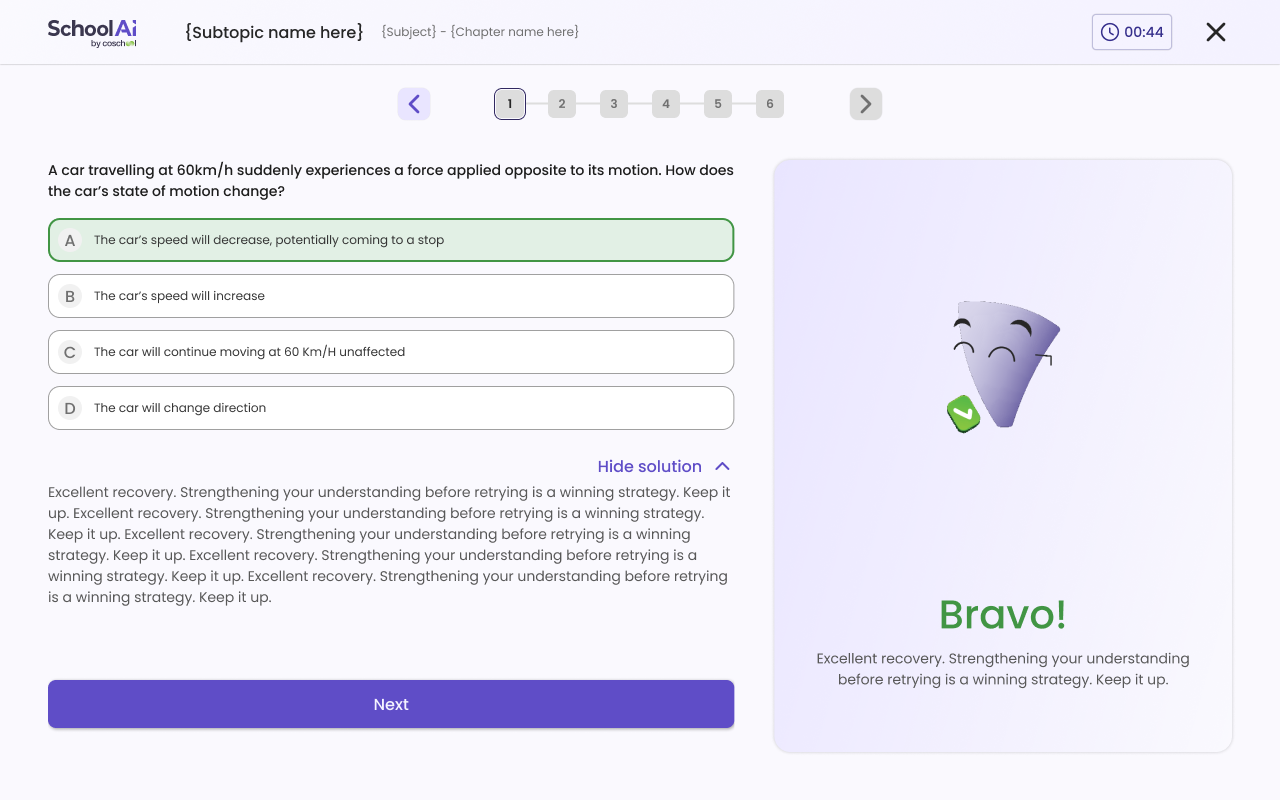
Get the Answer
Students can spend coins to get the answer with a clear explanation—useful when short on time or facing deadlines.
Before vs After
Before
- AI controls progression
- Unlimited / 2–3 similar questions per mistake
- Forced AI guidance
After
- Student controls progression
- Maximum 1 similar question
- Contextual AI guidance
Leadership & Results
Product leadership was largely focused on new initiatives. Rather than waiting for a formal mandate, our team (Manager, 1 Sr Researcher, 1 Jr Designer) continued developing and demonstrating the redesigned direction in weekly organisation-wide meetings within a 2-month timeline.
When you don't have the authority to change a decision, evidence and a better experience can still create influence. The redesigned experience eventually received recognition from the founder and delivered significant behavioral impact.
65% Drop in Gibberish
Students were no longer trying to fight the AI to move forward. The experience gave them clearer choices and more control.
More Predictable Learning
Assignments no longer expanded uncontrollably. Struggling students were directed toward learning concepts instead of endless questioning.